Recurring mould needs more than a surface clean
Shower Mould Removal from Grout & Silicone — Melbourne North
Blackened joints, mouldy silicone or grout that never dries? Send photos for an assessment of what can be cleaned, what needs replacing and whether a leak needs investigating.
- Photo assessment first
- Affected joints removed
- Sanitary anti-mould silicone
- Craigieburn-based service
What mould removal from grout & silicone involves
Shower mould develops where moisture remains long enough for growth to take hold. Soap scum, skin oils and other bathroom residues give it something to grow on, while warm air and repeated water contact keep joints damp. Grout lines, corners and the lower edge of a screen are particularly easy to overlook during everyday cleaning. Poor extraction, a closed ensuite or water sitting along a flat bead can make those spots slow to dry even when the rest of the bathroom looks clean.
The important distinction is between contamination on an intact surface and deterioration within a joint. A light film on sound tiles may respond to suitable cleaning. Dark staining that remains inside silicone, grout that crumbles when touched or a joint that stays wet needs a different assessment. Replacing affected material can be appropriate, but it is not a substitute for finding the moisture source. We assess the condition of the grout, the flexible seals and the surrounding tiles before recommending a repair scope.
Bleach-based products can lighten visible staining without resolving mould within porous grout or beneath a detached silicone bead. A whiter surface is not proof that the joint is clean, dry or properly bonded. Repeatedly applying strong cleaners also does not close a crack, restore missing grout or repair a leak behind the tile face. Follow the product label, check compatibility with your tile finish, ventilate the room and never mix cleaning chemicals. If staining returns in the same damp joint, send us photos rather than adding another layer of sealant.
Our shower mould service covers grout and silicone repairs around Craigieburn and Melbourne's north and north-west. The goal is to remove affected failed material where required, prepare the joints and restore a maintainable finish. We do not identify mould species from colour, promise that mould will never return or present a surface repair as whole-building remediation. Extensive wall or ceiling mould, persistent health concerns or a widespread moisture problem may need a separate building or environmental assessment alongside shower repairs.
Common problems we fix
If your shower is showing any of these, it is worth getting assessed now rather than later.
Soap scum holding moisture
Residue accumulates along grout and the base edge, keeping these surfaces damp. Removing that film and improving drying are important even after joint replacement; fresh materials do not remove the need for ordinary bathroom maintenance.
Mould embedded in silicone
Dark spots that remain through the bead, splits or lifting edges can mean the silicone needs removal. A new bead over the old one traps the failed material and does not create the clean bonding surfaces a reseal needs.
Porous or damaged grout
Grout that is pitted, missing or powdery holds residue and is harder to clean. Where the material is unsound, we rake out the affected grout rather than conceal it under a thin cosmetic skim.
Poor ventilation and slow drying
Condensation on the screen or ceiling after use suggests the room is not clearing moisture well. Check that the extractor is operating and unobstructed; a suitable professional should assess an ineffective fan or duct arrangement.
Water trapped at the base
A patch that remains wet between showers may be caused by pooling, a detached seal or moisture beneath the finish. Photograph where the water sits. Regrouting alone will not correct a poorly draining floor or a plumbing fault.
Mould with signs of a hidden leak
A musty smell outside the shower, swollen skirting, loose tiles or damp in the adjoining room warrants leak assessment. These signs are not proof of membrane failure, but they should not be dismissed as a surface-cleaning issue.
Why choose Aquashield for mould removal from grout & silicone
Cleaning or replacement — not guesswork
We distinguish sound but dirty joints from failed grout and silicone. That keeps the proposed repair focused on the actual condition rather than assuming every dark mark requires regrouting.
Moisture is part of the assessment
If a corner is repeatedly wet or damp extends outside the shower, the advice includes leak investigation. New grout cannot repair a broken pipe or a failed waterproof membrane beneath the tiles.
Practical care after the repair
Use extraction during showering and while the room is drying, clear soap residue regularly and squeegee excess water from tiles and glass. Keep wet toiletries away from corners, avoid abrasive scrubbing of new joints and use cleaners compatible with the grout, sealant and tile finish. These habits slow regrowth without a promise of a mould-free bathroom forever.
What you get
- A scope based on the condition of your shower
- Removal of affected failed grout and silicone where required
- Prepared joints rather than fresh material over contamination
- Grout and flexible sealant used in their appropriate joints
- Curing and cleaning guidance for the completed repair
Opening hours
Calls answered 7 days, 6am–9pm
Before & after
Real Melbourne showers repaired without ripping the bathroom out.
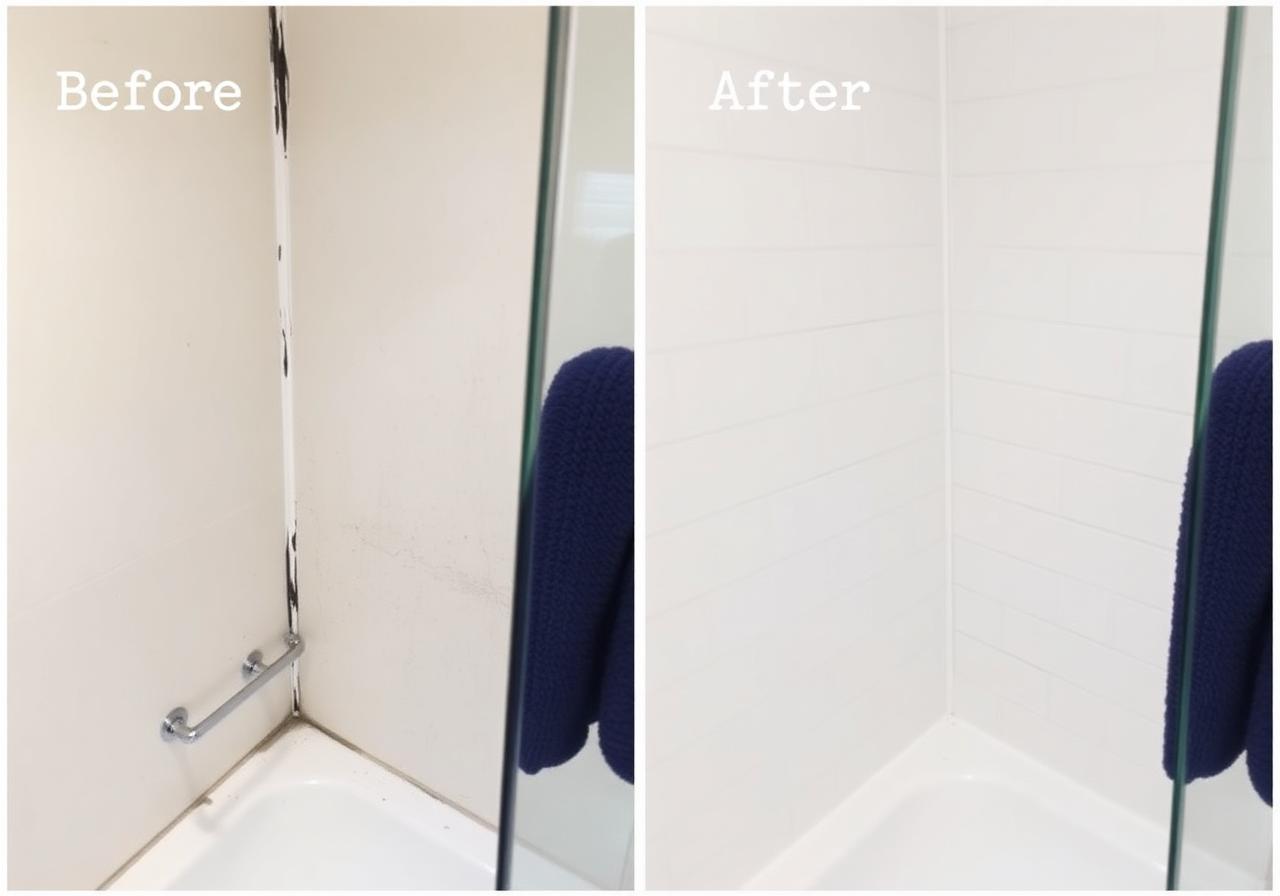
Silicone reseal
Mouldy black silicone stripped and replaced with a clean anti-mould bead.
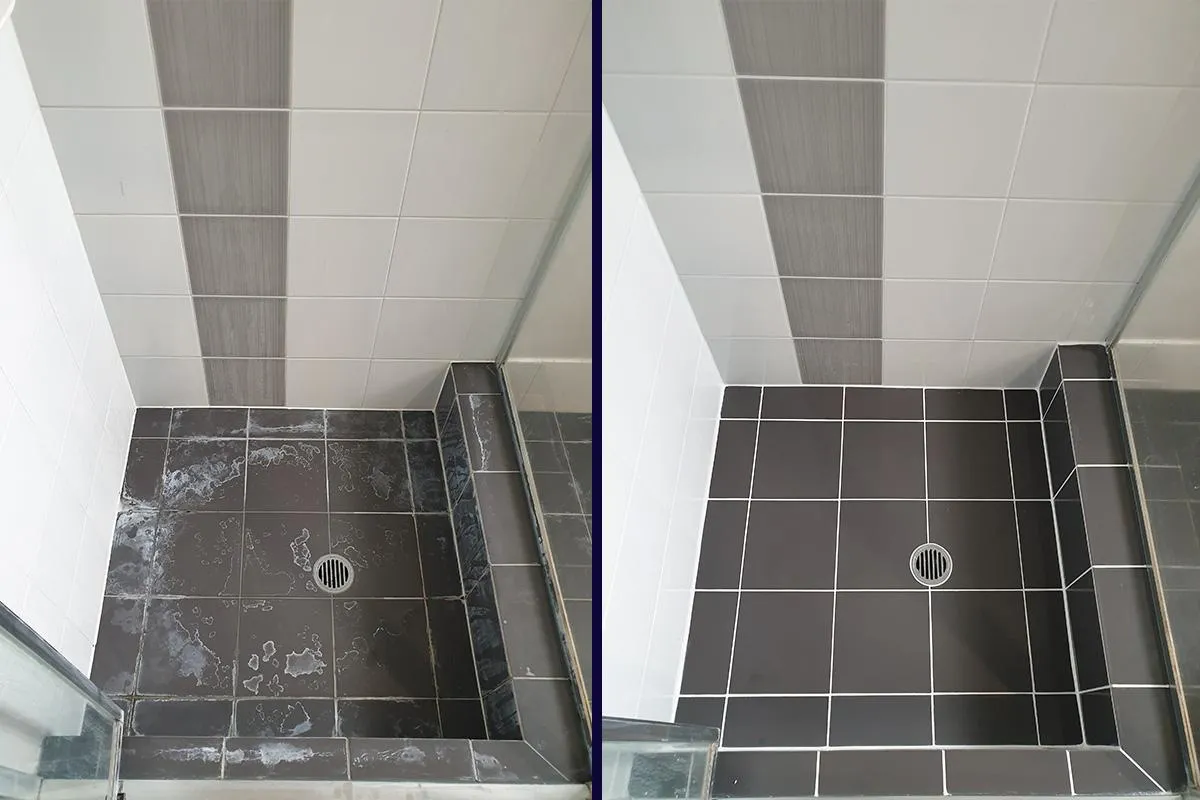
Regrout + deep clean
Stained grout removed, tiles deep-cleaned, fresh uniform grout laid.
Our simple repair process
Step 1
Assess photos and moisture signs
Send a full-shower image, close-ups of the mouldy joints and any damp outside the bathroom. Tell us when staining returns and whether a previous reseal has been tried. Photos support an initial assessment; concealed moisture or uncertain tile condition can require an on-site inspection before the scope is confirmed.
Step 2
Remove, clean and dry
For an agreed grout-and-silicone repair, affected unsound grout is carefully raked out and mouldy silicone is stripped from the relevant runs. Residue is removed and the exposed joints are cleaned and allowed to dry. We check the exposed condition rather than seal over moisture, and explain if the findings require a different repair.
Step 3
Regrout and reseal
Prepared rigid tile joints are regrouted where included in the scope. Movement joints receive an anti-mould neutral-cure sanitary silicone suitable for the surfaces and wet-area use. The bead is tooled to a neat profile, and the shower is kept out of use for the required curing period. Anti-mould additives help resist growth; they are not a permanent prevention guarantee.
Mould Removal from Grout & Silicone — frequently asked
Can black shower mould always be cleaned off?
No. Surface residue on sound finishes can sometimes be cleaned, but persistent staining inside silicone or deteriorated grout may require removal and replacement. Colour alone does not identify the organism or tell us how far it extends. Send a close-up and a wider photo so we can assess the joint condition.
Why does mould return after bleach cleaning?
A cleaner may lighten the visible stain while damp residue, porous material or contamination beneath a loose bead remains. Unless drying and the condition of the joint are addressed, the same environment remains. Never mix bleach with acids, ammonia or other cleaning products; follow the label and ventilate.
Do you replace both grout and silicone?
Where both need attention, the scope can include affected grout removal, cleaning, drying, regrouting and silicone replacement. Sound grout does not automatically need removal because neighbouring silicone is mouldy. We explain the recommended extent before booking and keep flexible sealant in the joints designed to move.
Will anti-mould silicone prevent mould permanently?
No. Sanitary anti-mould silicone is designed to resist growth, but ongoing damp and surface residue can still support mould. Correct preparation, curing, extraction and gentle regular cleaning all matter. We give care instructions appropriate to the completed repair rather than promising that mould cannot return.
When should shower mould be investigated as a leak?
Ask for a leak assessment if mould accompanies damp outside the shower, swelling, lifting tiles, ceiling stains or a joint that never dries despite ventilation. Water may come from a failed surface joint, plumbing or concealed waterproofing. A photo assessment is a starting point, not confirmation that a hidden membrane is sound.
Related repairs
Showers often need more than one of these. We'll confirm the right scope at assessment.
Shower Regrouting
Cracked grout removed and replaced.
Learn moreShower Silicone Replacement
Black mouldy silicone gone — replaced properly.
Learn moreLeaking Shower Repairs
Leaking shower? We stop the water.
Learn moreRelated reading
Get recurring shower mould assessed
Send clear photos of the grout, silicone and any surrounding damp. We will explain the repair options and confirm the scope before work is booked.
Melbourne metro & surrounding suburbs · Replies usually within 5–15 minutes during business hours